Lake Homes
What should I check about RV and boat parking?
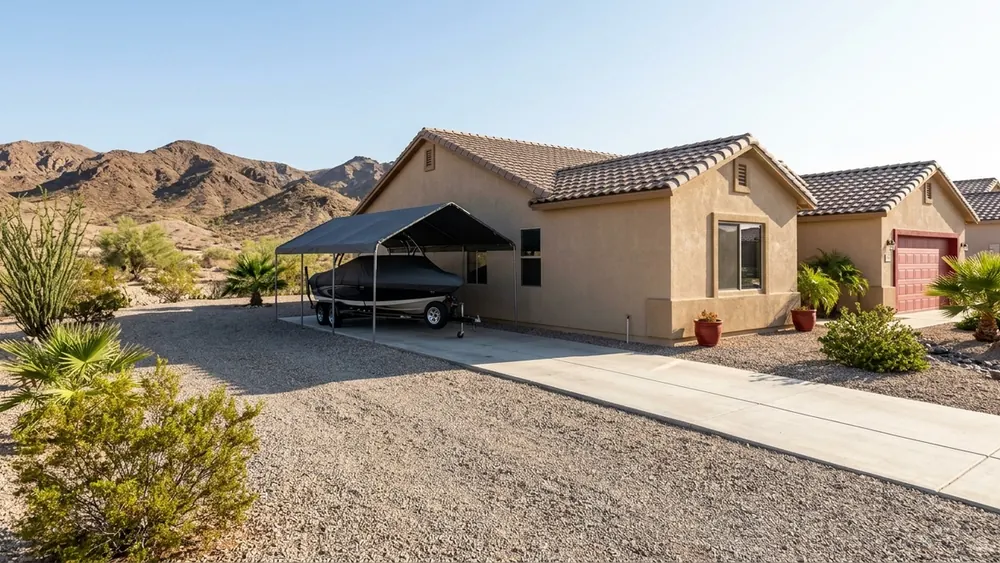
Before you count on RV or boat parking, check the lot, the gates and the access for that specific property, then confirm the rules that apply with the City of Lake Havasu City and any HOA documents.
On this page
Check the property first, then the rules
Before you count on parking an RV or boat at home, check two things for the specific property: whether it physically fits, and whether the rules that apply to that lot allow it. A listing that mentions RV parking is a starting point, not a final answer. Here, the answer depends on the lot, the access and any rules for that address, so confirm each one before you make plans around it.
This matters because parking is often the reason a buyer chose the home in the first place. If you are moving for the lake, the boat is part of the plan. If you travel, the RV may be as important as the kitchen. Finding out after closing that the rig does not fit through the gate, or that the rules say otherwise, is a costly surprise that a few questions up front can prevent.
None of this guide is a statement of the rules themselves. Parking rules can differ by property and can change, so the City of Lake Havasu City and any HOA documents are the sources to check. The real estate side of the job is knowing which questions to ask for each home and requesting the documents early. The final answer on what a lot allows comes from those official sources.
Measuring access before you fall for a home
Start with the physical fit. Measure your RV, trailer and boat, including the tongue, the mirrors and anything mounted on the roof. Then compare those measurements with the gate opening, the driveway, the side yard and the space you would need to turn. A tape measure on the first showing saves a second visit. Bring your own numbers in writing so you are not guessing while you stand in the driveway.
Look at the approach as well as the pad. Ask yourself whether you can back the rig in without crossing a neighbor’s lot, whether overhead branches, eaves or wires could get in the way, and whether the surface looks ready for the weight. Think about the angle from the street. A pad that looks generous in a photo can be tight once you account for the swing of a long trailer.
Picture the daily routine, too. How often will the boat go to the lake in your season? Will you hitch up alone? Is there room to wash, load and work on the RV without blocking the garage? If the answers make every trip a chore, the parking may technically exist but still not suit how you plan to use it. That is worth knowing before you fall for the rest of the home.
The rules that may apply to the lot
Rules are the second half of the question, and the part people most often assume. Some properties come with HOA documents that address where vehicles, trailers and boats may be kept. Others may be subject to city rules as well. Do not rely on what a neighbor does, what a previous owner did or what a listing remark suggests. Ask for the documents and read them.
If the home is in an HOA, request the governing documents early in the process, ideally before you write an offer or soon after. Read the sections about parking, storage, screening and vehicles, and write down anything unclear. If the language is hard to interpret, a real estate attorney can review it. Ask for help tracking the documents down and keeping your questions organized along the way.
For questions about what the city allows on a lot, go straight to official city sources. Rules about where an RV or boat may sit, whether it can be lived in and what structures you can add are exactly the kind of details that should come from the source, not from memory. Write down who you spoke with, what you asked and what they told you.
What to ask during a showing
Showings move quickly, so bring a short list and ask the same questions at every home. The answers will not all be final, but they tell you which homes deserve a closer look and which documents to request first. Note who gave each answer and whether it still needs confirming. A clipboard or a notes app works fine. What matters is that the same questions get asked at every home, so you are comparing like with like when the tours are done.
- Has an RV or boat actually been parked here, and where on the lot
- Are there HOA documents, and do they address vehicles, trailers or boats
- Is there power, water or a dump connection near the parking area
- Is covered or secured storage on the property, or would it need to be added
Treat every answer you hear at a showing as a lead to confirm, not a final ruling. A seller may genuinely believe the rules allow something without having checked recently. Use the showing to narrow the list, then use documents and official sources to make the decision. That order keeps you from building plans on a guess.
Who answers each parking question
Different questions belong with different sources. Sorting them before you start saves time and keeps you from treating an informal answer as a firm one. This table is a simple way to keep track of each question, why it matters and who can answer it. Add rows for anything specific to your own vehicles, and fill in the answers as they come back from each source so nothing gets lost between showings.
| Question | Why it matters | Who to ask |
|---|---|---|
| Does my RV or boat physically fit | Gates, driveways and turning room decide daily use | Your own measurements, with Cheryl at the showing |
| What do HOA rules say about parking | Association rules can limit vehicles, trailers and boats | HOA documents, reviewed early |
| What does the city allow on this lot | City rules can apply regardless of the listing remarks | City of Lake Havasu City |
| Can I add a pad, carport or garage | Additions may need approval before you build | City of Lake Havasu City and HOA documents |
| What does coverage look like for stored vehicles | Stored boats and RVs raise their own coverage questions | An insurance agent |
Keep the table with your notes on each home. When you compare two properties, the one with clear, documented answers may be the stronger fit even if it looked less impressive at first. If a question touches the contract or legal meaning of a document, add a real estate attorney or a title professional to your list of people to ask.
When parking at home falls short
Sometimes the home you love does not have room for everything. That does not automatically rule it out. You may decide the RV can live in off site storage, or that a smaller boat makes sense, or that a different lot with more access is worth a tradeoff elsewhere. The key is to decide that on purpose, not discover it after you move in.
If Lake Havasu City listings are not giving you the lot you need, Cheryl also covers nearby Mohave County communities, including Bullhead City, Fort Mohave, Mohave Valley, Kingman and Golden Valley. The same questions apply there: measure the access, read any HOA documents and confirm rules with official Mohave County sources. Widening the search is a choice to make with clear criteria, not a guess about where parking is easier.
What to gather before a first conversation
Before a first conversation, gather the details that make a parking search efficient. A few minutes of preparation means every showing can focus on the homes that might actually work, rather than on ones that fail a basic measurement. It also helps to know which part of the year you want to be settled, since the season can shape when you search and how quickly you need to decide.
- The measurements of your RV, trailer and boat, including the hitch and anything on the roof
- How often you expect to use each vehicle and in which part of the year
- Whether you need power, water, covered storage or room to work on the vehicles
- Any homes or lots you have already seen, with notes on gates and access
Bring that list to a first conversation with Cheryl Graner, along with any questions you want to take to the city, an HOA or an insurance agent. You do not need to have found the home yet. Start by describing what you need to park and how you plan to use the lake, and work out together which homes deserve a closer look and when to start the search.
This article is general information about buying and selling homes in Lake Havasu City and nearby Mohave County communities. It is not legal, tax, lending, title or inspection advice and does not predict prices or promise results. Confirm RV parking and HOA rules with the City of Lake Havasu City and HOA documents, lake and flood questions with official sources, financing with a lender, and property condition with a licensed home inspector. Cheryl Graner, HomeSmart.

Written by